By Michelle Azucena Barros Machado
Brigham Young University, Idaho
A Nine-Year-Old’s Dream: “I Want to Cross the U.S. Border—Illegally”
That first day I walked into the classroom and asked my new students the same question I always ask to break the ice:
“What do you want to be when you grow up?”
Though I’ve asked this question many times, I will never forget the response that came from a fearful little 9-year-old girl:
“I want to be big enough to cross the US border illegally.”
At least she responded; her classmates had not given a thought to their future.
Weeks later, I concluded that they had no aspirations of their own because they felt no hope of improving their lives.
A One-Teacher School, Hours from the City
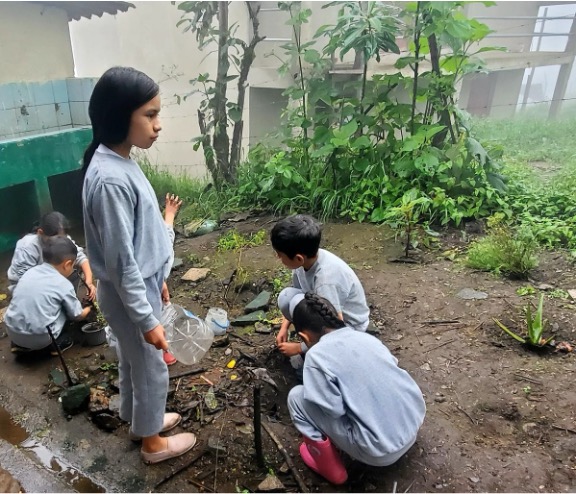
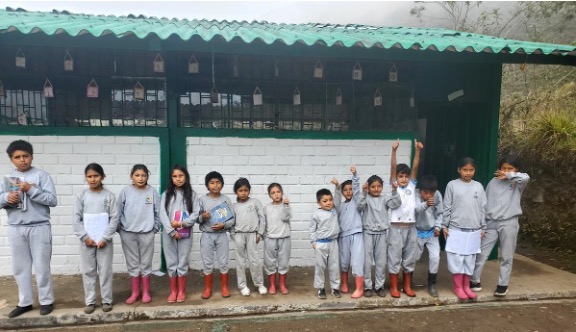
In October 2023, I began my journey as the teacher in a one-teacher school located in a rural area in Ecuador, 4 hours away from the nearest city, on an inaccessible and dangerous road. I knew that rural education was a challenge, and therefore, I wanted to dedicate time to serving in this area. What I did not know was the precariousness that I would encounter.
And no, I am not referring to the lack of infrastructure, internet access, educational materials, or public policies focused on rural education, although all of that was evident. The most devastating shortcoming was the generational impact of the lack of a teacher who cared.
“One day, the teacher tore off a student’s ear.”
“The teacher pushed me against the wall.”
“She beat us with a wooden ruler.”
“We found pencils she had taken from us a year ago.”
“Statements like these were frequent and broke my heart every time I heard them.” How was it that, even in the middle of the 21st century, stories of physical and emotional abuse were being shared like it was just another everyday occurrence? Then, it all made sense. In a classroom where a teacher does not care about her students, nothing good happens—because no one cares enough to make it happen. The kids were extremely behind in school—some were 11 years old and did not even know their times tables. Many struggled just to read or write. They had no idea what it meant to study and were used to never doing homework. Sure, they had been in school, but school did not reach them.
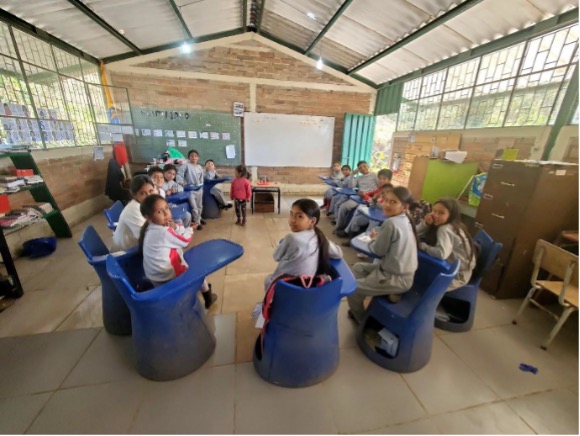
According to UNESCO, in 2022, 10.9% of the Ecuadorian rural population was illiterate, compared to 4.2% in urban areas. Behind these numbers are the children of my community—living proof of the deep educational crisis facing rural areas in Latin America.
Just Like Yours—But Without the Same Chances
In many ways, these kids are just like yours.
Some struggle with math, while others breeze through it. Some are curious about nature; others are fascinated by computers—whether it’s using them or figuring out how they work. They laugh at recess, argue over little things, and get lost in a good story. Some love puzzles, others would rather paint. But not all of them have the same support.
Some go home to violence or neglect. Others have no one cheering them on or helping with homework. And while a few are lucky to have parents who truly see them, many have parents who do not even know what makes their child light up.
“My kids are just like yours—but without the same opportunities.”
Calling All Dreamer-Teachers: We Need You
Setting aside the challenges of rural life, I want to offer a heartfelt call to committed teachers who work in rural areas:
To all the dreamer teachers like me who believe change is possible, I am here to say: yes, wecan plant seeds, even in the toughest, most neglected places.
To every teacher who believes that education can change the world—to change the world of the least favored, even the children from rural areas…
Our work can create a clear before and after — and together, we will make a difference. Our perceptions as teachers can strongly influence student perceptions. Let us positively influence those children who live without hope and without a vision of their future.
“In a classroom where a teacher cares, everything changes.”
Equity Begins with Us
Quality and caring education is a right for all—not a privilege of some. If we do not care about minorities and continue to prioritize urban or private education, as is typically seen with rural education, the gap of inequality and injustice will continue to grow.
Without a change in our commitment to equitable education, the cycle will continue: the poor remain poor, while the rich grow richer. If I had not been there myself, 50 miles away from the city, I would not have witnessed inequity at its worst.
A New Dream for a Little Girl
A year and a half after I arrived, I asked my students the same question again:
“What do you want to be when you grow up?”
In truth, most of them were still undecided. They did not know whether to be a neurosurgeon, police officer, soldier, doctor, teacher, artist, engineer—or even an astronaut.
And that little girl, my little girl, changed her dream; she no longer wanted to grow up enough to cross the U.S. border illegally.
Now she wants to become a teacher.
Will You Be the Next Seed Planter?
To every educator reading this:
You can be the one to plant hope where there’s been none.
You can change the story of a child who has never been seen.
Even where hope has no home, you can shine a light that transforms a life.
Because in the end, our greatest work is not in delivering lessons, it is in giving hope and awakening dreams.
References
- Juharyanto, J. et al. (2020). Gethok Tular as the Leadership Strategy… SAGE Open. https://doi.org/10.1177/2158244020924374
- Lake, D. (2008). Perceptions of Science in One-Teacher Schools. Teaching Science, 54(3), 36–38.
- Ministerio de Educación. (2011). Ley Orgánica de Educación Intercultural. https://educacion.gob.ec/documentos-legales-y-normativos/
- UNESCO. (2022). Ecuador. SITEAL. https://siteal.iiep.unesco.org/pais/ecuador
- United Nations. (2023). Take action for the sustainable development goals – united nations sustainable development. https://www.un.org/sustainabledevelopment/sustainable-development-goals/